The Ferrari that wasn’t: the real story behind Miami Vice’s cars
he black Ferrari Daytona in Miami Vice had a secret. Underneath its Italian styling was a Chevrolet Corvette. Ferrari later supplied two genuine Testarossa’s, and the Daytona met an explosive end on screen. But the popular story that Ferrari demanded its destruction needs a little qualification.
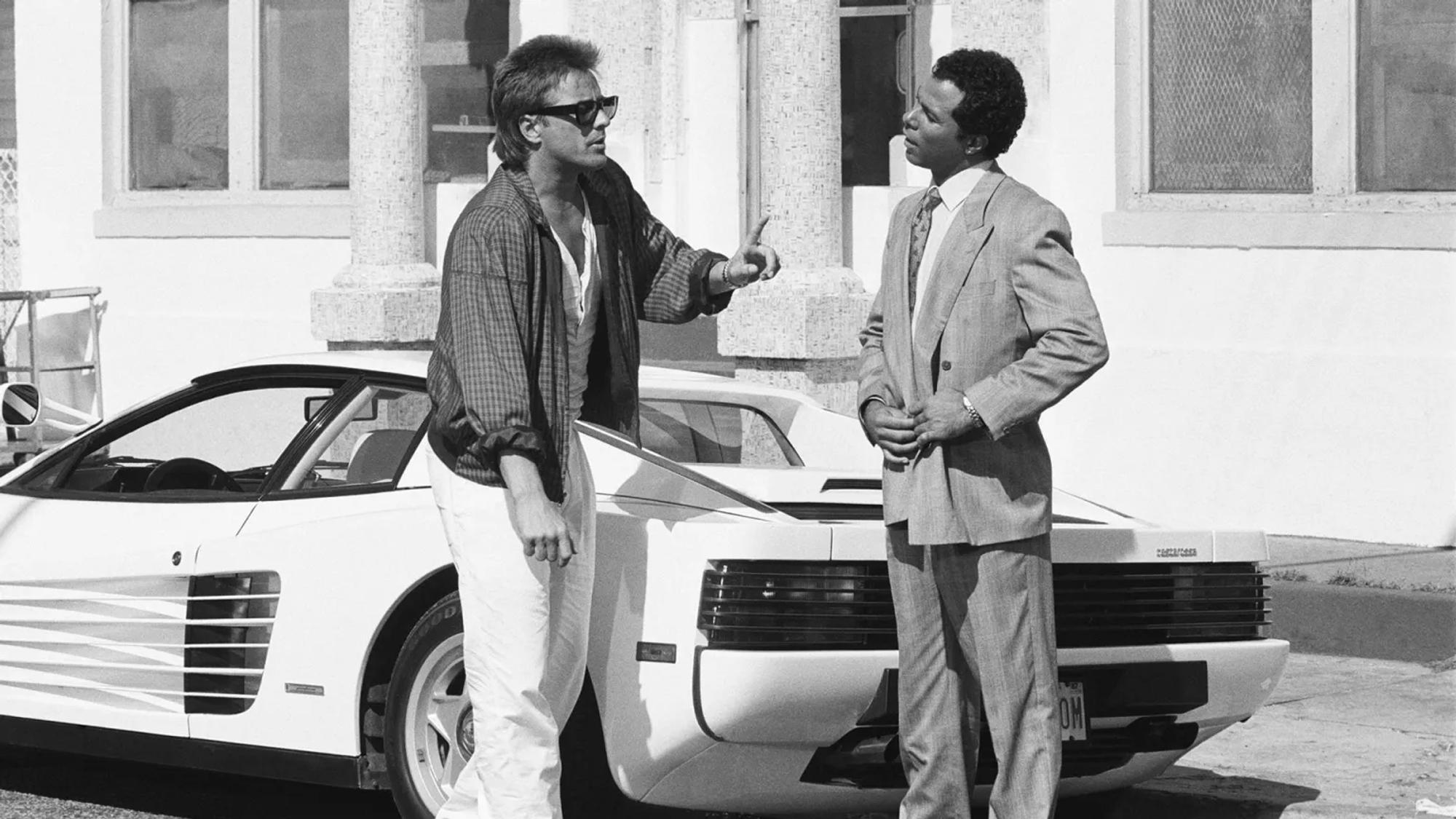
ome cars take you straight back to a particular moment. A bedroom poster. An opening title sequence. The first time you thought that, one day, you might own something rather special.
For anyone who associates the Ferrari Testarossa with Miami Vice, which is exactly were I do, that connection is easy to understand. The car looked entirely at home in a world of palm trees, pastel tailoring and late night drives.
What makes the story more interesting is that the program’s earlier Ferrari wasn’t a Ferrari at all.
Was the Miami Vice Daytona a real Ferrari?
The black Daytona driven by Sonny Crockett was a replica built by McBurnie Coachcraft using a Corvette C3 chassis. According to MotorTrend, cost and Ferrari North America’s initial refusal to supply cars led the production to use replicas.
For television, the illusion did its job. The long bonnet and open roof delivered the look the programme needed. Most viewers were watching the chase, not thinking whether the cars were genuine.
Ferrari, however, had good reason to notice the difference.
Did Ferrari really insist that it was blown up?
This is where the familiar internet version becomes a little too tidy.
MotorTrend reports that Ferrari took legal action against McBurnie, the replica manufacturer. That should not be casually rewritten as a lawsuit against the television programme.
In an interview with Car and Driver, producer Michael Mann recalled Ferrari North America contacting him because Enzo was unhappy about the imitation. Mann’s account has him asking for two Testarossa’s and offering to destroy the pseudo Daytona on screen.
That is a rather different emphasis from Ferrari issuing an ultimatum. Mann also described the Testarossa’s as loans in a separate interview with Tra Publishing.
The exchange happened, the precise terms are less clear.
Was the replica actually destroyed?
On screen, the Daytona was blown up early in the third series. In reality, MotorTrend reports that the two filming replicas survived.
An appropriate twist for a story about a car that was already playing a part.
Why was the Miami Vice Testarossa white?
Road & Track reports that the two genuine Testarossa’s were originally black, then repainted white to make them more visible during night filming.
It was a practical production decision with a memorable visual result. Imagine those scenes with a different car, or even the same car in another colour, and they lose something.
To my mind, that is the most interesting part of this story. A choice made to help a television camera gave the Testarossa an identity that enthusiasts still recognise immediately.
Why these stories stay with us
When you think about the cars you have always wanted, the starting point is rarely a specification sheet or how fast they go.
You remember how a car looked, where you first saw it and what it represented at the time.
That is why a story like this belongs in a conversation about special cars. It explains a little of the attachment that horsepower figures and performance comparisons never quite capture.
At Dorsia, our work is arranging finance for luxury, sports and classic cars. But the interest in the cars themselves matters too. Understanding why someone wants a particular model is part of understanding the purchase.
And sometimes that interest begins with a television programme, a white Ferrari and an aspiration that stays with you for years.
Which car first made you think, “One day”?